
Seed Phrases: How to Store Them Safely Offline
Imagine waking up to find your crypto wallet empty — not because of a hack, but because you lost the one thing that could restore it. Your seed phrase is the master key to everything you own on-chain, and if it disappears, so do your funds. Permanently. We’ve seen too many Canadians treat their seed phrase like a password they can jot into a notes app or email to themselves. That’s a disaster waiting to happen. Online storage means your master key lives on a device connected to the internet — exactly where hackers, malware, and phishing scams operate. In this guide, we’ll walk you through how to store your seed phrase safely offline, the way it was always meant to be done.
What Is a Seed Phrase and Why It’s Your Crypto Master Key
A seed phrase is a sequence of 12 to 24 random words generated by your wallet when you first set it up. It acts as a backup that can regenerate every private key and address derived from that wallet. Lose it, and you lose access to your funds forever — no customer support line, no password reset, no exceptions. Share it with anyone, and they can drain your wallet in seconds. Popular hardware wallets like Ledger and Trezor generate seed phrases during setup, and they’re designed to keep your keys offline. But the seed phrase itself? That’s on you to protect.
How Seed Phrases Differ from Private Keys
A private key controls a single wallet address. A seed phrase controls every address your wallet has ever generated — and every address it will generate in the future. Think of a private key as one key to one door, and a seed phrase as the master blueprint for the entire building. If you lose a private key, you only lose access to that one address. If you lose your seed phrase, you lose everything.
The Fatal Mistake: Storing Seed Phrases Digitally
We can’t say this loudly enough: never store your seed phrase on any device connected to the internet. That means no photos, no cloud notes, no password managers, no email drafts. Hackers don’t need to break into your house — they just need access to your phone, laptop, or cloud account. Once your seed phrase is digital, it’s exposed to malware, keyloggers, and data breaches you’ll never see coming.
Offline Storage Options: From Paper to Steel
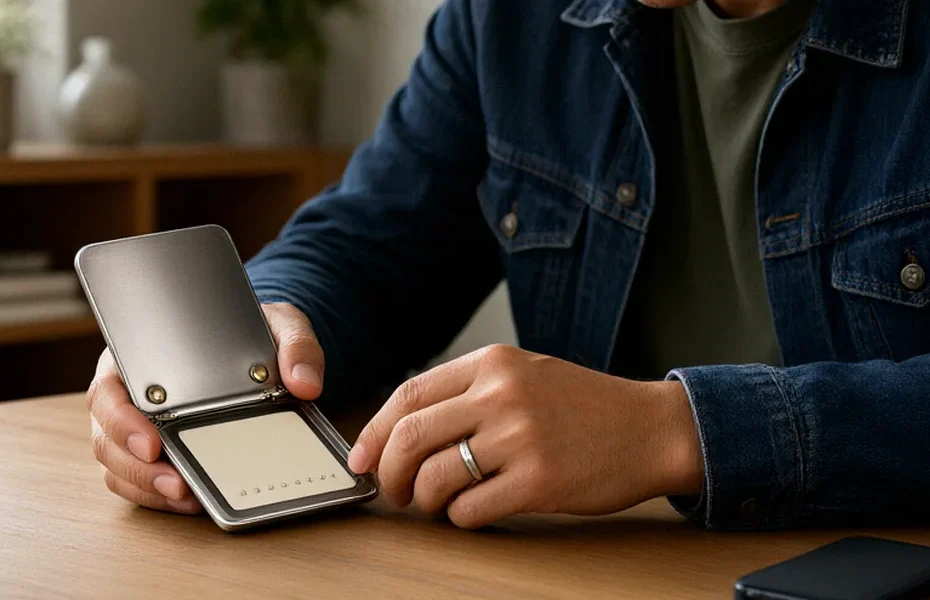
When it comes to offline storage, you’ve got three main options: paper, metal, and DIY methods. Each has trade-offs. Paper is cheap and easy but vulnerable to fire, water, and fading ink. Metal backups like Cryptosteel or Billfodl are built to survive extreme conditions — fire, flood, even being run over by a car. DIY methods like etching or stamping onto metal can work, but they require care and precision.
Paper Wallets: Cheap but Fragile
Writing your seed phrase on paper is the simplest starting point. Use acid-free paper and archival ink if you can. Store it somewhere dry and away from sunlight. But understand the risks: a house fire, a burst pipe, or even years of humidity can destroy it. Paper is a temporary solution at best.
Metal Backups: Heavy-Duty Protection
Metal backup devices like Cryptosteel and Billfodl let you stamp or slide individual letters onto stainless steel plates. These survive house fires, floods, and physical impact. They’re not cheap — usually $50 to $200 — but if you’re holding meaningful amounts of crypto, they’re worth every dollar. Stamping or engraving is far more durable than writing with a marker or pen.
DIY Offline Methods: Etching, Stamping, and More
If you’re handy, you can etch or stamp your seed phrase onto a metal washer, a steel plate, or even a titanium rod. Just make sure the letters are legible and permanent. Avoid anything that could corrode or fade. And always double-check your work — a single wrong letter means a useless backup.
Best Practices for Storing Your Seed Phrase Offline
Once you’ve chosen your storage medium, the next step is strategy. Don’t keep your seed phrase in one place. Split it across multiple locations so that a single fire, theft, or flood can’t wipe you out. Use a home safe or a bank safety deposit box — but be aware that in Canada, a bank safety deposit box may not be insured for crypto assets. Check the fine print before you trust it with your master key. And remember: the CRA crypto rules require you to report gains and keep records, but they never ask for your seed phrase. No legitimate tax authority will ever request it.
Geographic Redundancy: Don’t Keep All Eggs in One Basket
Store parts of your seed phrase in at least two separate, secure locations — ideally in different cities or provinces. If one location is compromised or destroyed, the other still protects you. Just make sure that no single location contains enough information to reconstruct the full phrase on its own.
Tamper-Evident Packaging and Seals
Use tamper-evident bags or seals to store your backup. If someone opens it, you’ll know. This is especially important if you’re storing your seed phrase in a shared space or with a trusted family member. A simple tamper seal can mean the difference between catching a breach early and losing everything.
Should You Tell Anyone? The Inheritance Problem
If something happens to you, your family needs a way to access your crypto. But telling the wrong person your seed phrase is a recipe for theft. Consider using a sealed letter with a lawyer or a safety deposit box that names a trusted executor. Never share your seed phrase casually — even with family — unless you’ve set up a proper inheritance plan.
Common Mistakes That Put Your Seed Phrase at Risk
Even careful people slip up. We’ve seen it all: photographing the phrase, storing it in Google Drive or iCloud, emailing it to yourself, or typing it into a computer. Each of these creates a digital trail that hackers can follow. Phishing scams often target seed phrases directly — fake wallet apps, fake support emails, fake websites. And meme coin rug pulls can distract you from security basics while you chase the next big thing.
Digital Copies: The Silent Killer
A photo in your camera roll. A note in your cloud account. A text message to yourself. These all seem harmless, but they’re digital breadcrumbs leading straight to your crypto. Delete any digital copies immediately and never create them in the first place.
Social Engineering and Phishing Attacks
Scammers will pose as wallet support, exchange staff, or even friends. They’ll ask you to “verify” your wallet by entering your seed phrase. No legitimate service will ever ask for your seed phrase. Ever. If someone does, it’s a scam — hang up, close the email, and walk away.
Physical Theft and ‘Evil Maid’ Attacks
Not all threats are digital. An “evil maid” attack happens when someone with physical access to your space — a cleaner, a landlord, a guest — searches for your seed phrase. Never hide it in obvious spots like a desk drawer, a book on a shelf, or under a mattress. Use a locked safe or a safety deposit box.
Step-by-Step: Creating a Secure Offline Backup Plan
Here’s a practical checklist we recommend for every Canadian crypto holder. Generate your seed phrase offline, write it down carefully, verify the backup, store it in multiple secure locations, consider upgrading to metal, and test recovery with a small amount first. Remember: Canadian winters can cause power outages, so offline storage isn’t just smart — it’s essential.
Step 1: Generate and Verify
Set up your hardware wallet in a private, offline environment. Write down the seed phrase exactly as shown. Double-check every word. One wrong letter and your backup is useless.
Step 2: Choose Your Storage Medium
Decide between paper, metal, or DIY. If you’re holding long-term, go metal. If you’re just starting, paper is fine — but upgrade as soon as you can.
Step 3: Distribute and Document
Split your seed phrase across at least two secure locations. Document where each part is stored — but never write down the full phrase in one place. Use tamper-evident seals if you’re storing it outside your home.
Step 4: Test Your Backup
Before you move serious funds, test your backup. Wipe a wallet, restore it using your seed phrase, and confirm your funds appear. This proves your backup works. Do this with a small amount first.
FAQ
Can the CRA ask for my seed phrase?
No. The CRA crypto rules require you to report gains and keep transaction records, but they never ask for your seed phrase. If anyone claiming to be from the CRA requests it, it’s a scam.
Is a bank safety deposit box safe for my seed phrase?
It’s secure physically, but in Canada, a bank safety deposit box may not be insured for crypto assets. Check your bank’s policy and consider whether the box is the right fit for your backup.
What’s the best metal backup brand?
Cryptosteel and Billfodl are two of the most trusted names. Both survive fire and water, and both let you stamp or slide letters onto stainless steel plates.
Should I split my seed phrase across multiple locations?
Yes. Geographic redundancy protects you from fire, theft, and natural disasters. Just make sure no single location has enough words to reconstruct the full phrase.
What if I forget my seed phrase?
If you lose your seed phrase and don’t have a backup, your funds are gone forever. There is no recovery process. That’s why offline storage and regular verification are non-negotiable.
Your seed phrase is the ultimate control over your crypto. No bank, no government, no support team can restore it for you. For Canadians, taking offline storage seriously isn’t just good practice — it’s the only way to truly own your digital money. Store it offline, store it securely, and never share it with anyone.