
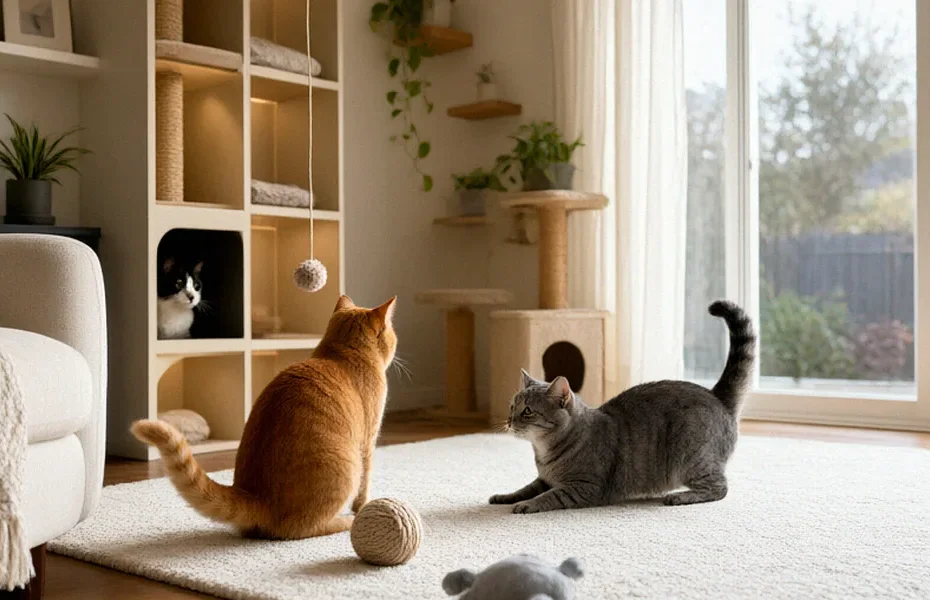
Enrichment Ideas for Indoor Cats: Keeping Your Feline Happy and Healthy
Keeping an indoor cat entertained through a long Canadian winter is one of the trickiest parts of feline ownership. When the mercury drops to -30°C in Winnipeg or the rain settles over Vancouver for weeks, that window view stops being enough. We’ve seen firsthand how quickly a bored cat turns into a stressed cat — and how a little creativity with toys, spaces, and routines can completely turn things around. Enrichment isn’t a luxury for indoor cats; it’s the foundation of their physical and mental health.
Why Enrichment Matters for Indoor Cats
Indoor cats generally live longer than outdoor cats, largely because they avoid cars, predators, and infectious diseases. But that longer lifespan comes with a trade-off: without stimulation, indoor cats are prone to obesity, urinary issues, anxiety, and compulsive behaviours like over-grooming. The Canadian Veterinary Medical Association has repeatedly flagged obesity as one of the most common — and most preventable — health problems in Canadian indoor cats, with some estimates suggesting more than half of household cats are overweight or obese.
Boredom is the hidden culprit behind a lot of this. A cat that sleeps 16 hours a day and eats from a bowl twice daily has almost nothing to do. That’s why we always tell owners: enrichment isn’t about spoiling your cat. It’s about replicating the hunt, the climb, the stalk, and the problem-solving that a cat’s brain is wired for.
The Science Behind Feline Enrichment
Cats are crepuscular predators with a natural drive to hunt multiple small prey throughout the day. When that drive has no outlet, stress hormones rise and behaviour problems follow. Environmental enrichment — toys, climbing structures, foraging opportunities, and social interaction — has been shown in veterinary behaviour studies to reduce anxiety, lower cortisol levels, and increase activity. In practical terms, a well-enriched cat is calmer, leaner, and less likely to shred your couch.
Common Myths About Indoor Cat Care
We hear the same myths constantly, and they’re worth clearing up:
- “My cat is lazy by nature.” Most “lazy” cats are simply under-stimulated. Give them a wand toy and watch what happens.
- “Indoor cats don’t need vaccines or vet visits.” They absolutely do — indoor cats still face dental disease, parasites brought in on shoes, and age-related conditions.
- “A second cat will solve the boredom.” Sometimes yes, sometimes no. Compatibility matters more than company.
- “Toys are enough.” Toys without interaction, rotation, or novelty lose their appeal within days.
Interactive Play: Toys and Games Your Cat Will Love
Nothing beats a wand teaser for bonding and exercise. Canadian cat owners have great options: Go Cat wand toys and Da Bird feathers are favourites in our community because they mimic the erratic flight of real prey. The key is rotation — keep three or four toys in a drawer and swap them weekly so they stay novel.
Laser pointers are fun but need to be used responsibly. Always end a laser session by landing the “prey” on a physical toy or treat so your cat gets the satisfaction of a catch. Otherwise, you can create frustration and obsessive behaviour.
DIY Toys You Can Make at Home
You don’t need to spend much. A crumpled foil ball, a toilet paper tube with treats inside, or a sock stuffed with catnip all work. We’ve seen cats ignore $30 toys in favour of a milk jug ring — the point is movement and unpredictability, not price.
Scheduling Playtime for Busy Owners
Two focused 10–15 minute sessions per day — ideally morning and evening — is enough for most cats. Pair play with meals to mimic the natural hunt-eat-groom-sleep cycle. If you work long hours, consider a timed feeder or a motion-activated toy to bridge the gap.
Environmental Enrichment: Creating a Cat-Friendly Home
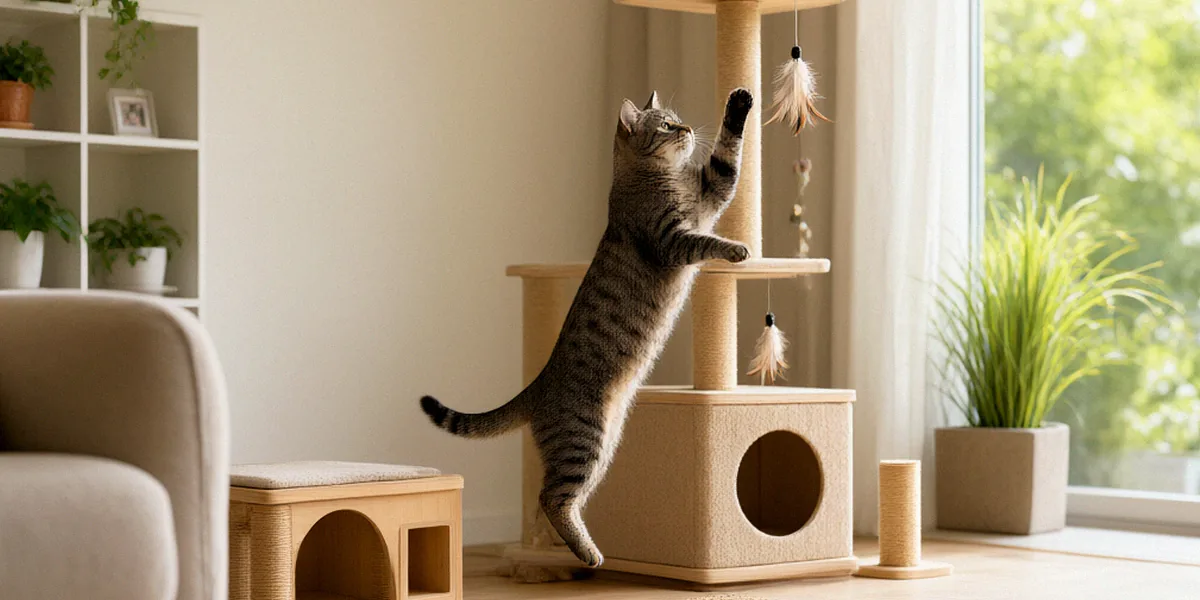
Vertical space is everything. Cats feel safest when they can survey a room from above, so cat trees, wall shelves, and window perches aren’t just decor — they’re stress management. Canadian retailer Pet Valu carries affordable cat trees and window-mounted perches that work well in smaller apartments.
Scratching posts are non-negotiable. Place them near where your cat already scratches, and choose sisal or cardboard over carpet so the texture is distinct from your furniture. A tall, stable post is better than a short wobbly one — cats need a full stretch.
Setting Up a Catio for Safe Outdoor Access
A catio gives your indoor cat fresh air and birdwatching without the risks of free-roaming. Even a small window box catio can transform a cat’s day. If you’re handy, DIY plans are widely available; if not, prefab options ship across Canada.
Using Pheromones Like Feliway to Reduce Stress
Feliway diffusers release a synthetic copy of the feline facial pheromone that signals safety. They’re especially useful during moves, renovations, or when introducing a new pet. We recommend plugging one in a week before any anticipated change.
Food Puzzles and Foraging: Making Mealtime Fun
Free-feeding from a bowl is the fast track to a bored, overweight cat. Puzzle feeders turn mealtime into a hunt. Two of our go-to recommendations are the Trixie Mad Scientist (great for dry food and treats) and the Kong Cat Wobbler (ideal for beginners). Canadian pet owners can find both at PetSmart Canada, along with a rotating selection of other foraging toys.
Choosing the Right Puzzle for Your Cat’s Skill Level
Start easy. If your cat gives up in frustration, the puzzle is too hard and you’ll create food aversion. Begin with a wobble-style toy that drops kibble with a single paw swipe, then graduate to sliding-tile or maze puzzles.
Transitioning from Bowl to Puzzle Feeder
Do it gradually:
- Offer half the meal in the bowl, half in the puzzle.
- Show your cat how the puzzle works by dropping a treat in front of them.
- Once they’re confident, move the full meal into the puzzle.
- Rotate puzzles weekly to keep the challenge fresh.
Social Enrichment: The Role of Companionship
Some cats thrive with a feline friend; others prefer being an only cat. The Canadian Federation of Humane Societies recommends adopting in pairs when possible, especially for kittens, because littermates provide built-in play and comfort. For adult cats, personality match matters more than age.
Introducing a New Cat to Your Home
Slow introductions prevent lifelong feuds. Keep the new cat in a separate room for the first week, swap bedding so they learn each other’s scent, then do supervised meetings through a cracked door or baby gate. Rushing this step is the number one reason introductions fail.
Training Your Cat: Clicker Training Basics
Cats are trainable — they just aren’t motivated by pleasing you the way dogs are. Clicker training works by marking a desired behaviour with a click, then rewarding with a treat. Start with something simple like “touch the target,” and keep sessions under five minutes.
Seasonal Enrichment: Keeping Cats Busy in Canadian Winters
Winter is genuinely tough on indoor cats. Shorter days, sealed windows, and less household activity can all contribute to lethargy and low mood. A few things that help: a K&H heated bed placed near a sunny window, a suction-cup bird feeder outside the glass, and supervised snowball play if your cat enjoys it (never let them eat treated or salted snow).
Winter Safety Tips for Indoor Cats
Watch for dry skin, dehydration (cats drink less in cold weather), and drafts near litter boxes. Keep paws clear of ice-melt residue tracked in from outside, and make sure your cat has warm, elevated resting spots away from cold floors.
Summer Enrichment: Harness Training and Walks
Once the snow melts, harness training opens up a whole new world. Start indoors with short sessions, reward calm behaviour, and only venture outside once your cat is comfortable in the harness. A supervised walk around the yard can be the highlight of an indoor cat’s week.
FAQ
How much playtime does an indoor cat actually need?
Most cats do well with two 10–15 minute interactive sessions per day, plus access to solo toys and puzzles. Kittens and high-energy breeds may need more.
Is it cruel to keep a cat indoors?
No — indoor cats live longer, safer lives. The key is compensating with enrichment: play, vertical space, foraging, and social interaction.
Do I need pet insurance in Canada for enrichment-related issues?
Enrichment helps prevent many problems, but accidents and illnesses still happen. Pet insurance in Canada can cover behavioural consultations, dental care, and emergency treatment — check whether your policy includes behavioural coverage before you need it.
What’s the best puzzle feeder for a beginner cat?
The Kong Cat Wobbler is the easiest starting point. Once your cat masters it, move to the Trixie Mad Scientist or a sliding-tile puzzle.
Can I use Feliway alongside other enrichment tools?
Yes. Feliway works best as part of a broader strategy that includes play, vertical space, and predictable routines. It’s not a substitute for enrichment — it’s a support tool.
Enrichment is an ongoing commitment, not a one-time shopping spree. Rotate toys, change up puzzle feeders, rearrange climbing furniture, and pay attention to what your cat actually enjoys. If you notice sudden behaviour changes — hiding, aggression, or appetite loss — talk to your veterinarian, especially if your pet insurance Canada plan includes behavioural consultations. A happy indoor cat is a well-enriched one, and it’s never too late to start.