
Litter Box Problems and Fixes: A Canadian Cat Owner’s Guide
You walk past the litter box and notice it’s completely clean—too clean. Meanwhile, there’s a suspicious damp spot on your favourite throw rug, or worse, a surprise behind the couch. If this sounds familiar, you’re not alone. Litter box avoidance is one of the most common complaints we hear from Canadian cat owners, and it’s frustrating for everyone involved. The good news? In most cases, there’s a solvable reason behind the behaviour. We’ve put together this guide to help you work through the problem systematically, from ruling out medical issues to adjusting your setup for Canadian apartments, winters, and everything in between.
Why Your Cat Might Avoid the Litter Box
First, let’s clear up a common misconception: your cat isn’t doing this out of spite. Cats don’t plot revenge. When a cat stops using the litter box, it’s almost always communicating something—pain, stress, or dissatisfaction with their environment. According to guidelines from the Canadian Veterinary Medical Association (CVMA), feline urinary health issues are among the leading reasons cats avoid their boxes, and these problems are surprisingly prevalent in Canadian households.
Medical Reasons to Rule Out First
Before you change anything about your litter setup, book a vet visit. Urinary tract infections (UTIs) and feline idiopathic cystitis—a painful bladder inflammation with no identifiable cause—are extremely common in cats. Both conditions make urination uncomfortable, and cats quickly learn to associate the litter box with pain. Other medical culprits include kidney disease, diabetes, arthritis (which makes climbing into a high-sided box difficult), and blockages, which are life-threatening emergencies in male cats.
The CVMA recommends regular veterinary checkups to catch urinary issues early, especially in cats over seven years old. If your cat is straining, crying while urinating, or producing only tiny amounts of urine, stop reading and call your vet or an emergency clinic immediately.
Stress and Environmental Triggers
If your vet gives your cat a clean bill of health, the problem is likely environmental. Cats are creatures of habit, and even small changes can throw them off. Common triggers we see include:
- A new pet or baby in the home
- Moving to a new house or apartment
- Renovations or loud noises
- A dirty litter box (yes, some cats are that particular)
- Another cat blocking access to the box
- Changes in litter brand or type
In Canadian winters, cats spend far more time indoors, which can increase territorial tension in multi-cat homes and make litter box maintenance even more critical.
Choosing the Right Litter and Box for Canadian Homes
The litter and box you choose matter more than most owners realize. In smaller Canadian apartments, odour control and space efficiency become especially important, but you also don’t want to sacrifice your cat’s comfort for your own convenience.
Litter Types: Clumping, Crystal, and Natural Options
Most cats prefer unscented, fine-grained clumping litter. Scented litters can irritate sensitive noses and respiratory systems. Popular options available at Pet Valu and PetSmart Canada include Arm & Hammer clumping litter and World’s Best Cat Litter, which is corn-based and biodegradable. Crystal litters absorb moisture well but some cats dislike the texture. Natural options like pine, wheat, and walnut litters are gaining traction with eco-conscious Canadian owners, but introduce any new litter gradually by mixing it with the old one.
Box Size, Location, and Number of Boxes
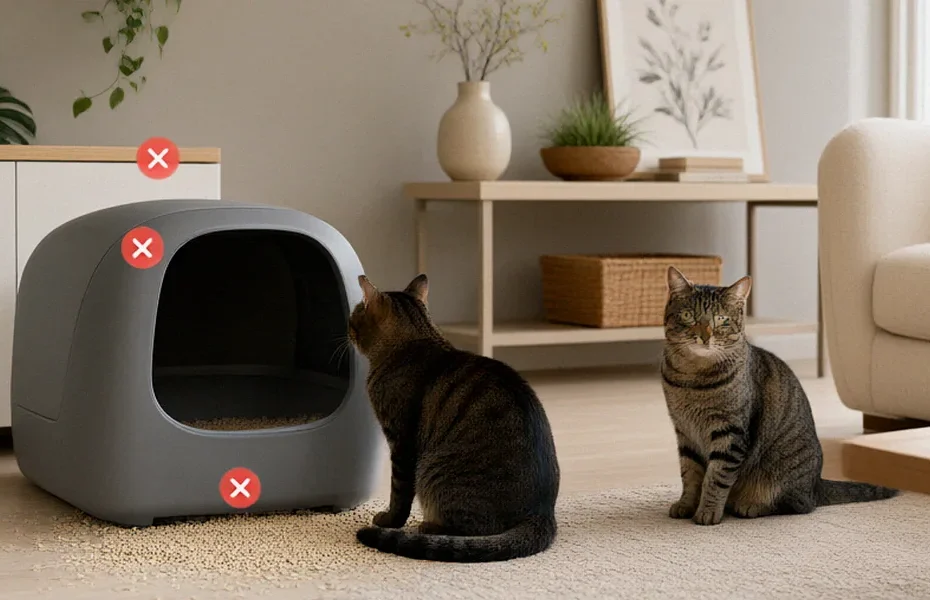
The general rule is one box per cat, plus one extra. A box should be at least 1.5 times the length of your cat. Covered boxes may look tidy, but in small Canadian apartments they trap odours and can make cats feel trapped—especially if there’s only one exit. Place boxes in quiet, low-traffic areas, away from food and water. If you have a multi-level home, put a box on each floor.
Cleaning Routines That Prevent Problems
Consistency is everything when it comes to litter box hygiene. A box that’s clean enough for you might still be unacceptable to your cat, so err on the side of more frequent cleaning.
Daily, Weekly, and Monthly Tasks
- Daily: Scoop clumps and solid waste at least once, ideally twice.
- Weekly: Top up litter and give the box a quick wipe-down.
- Monthly: Empty the box completely, wash it with unscented soap and warm water, and let it dry before refilling.
Avoid harsh chemicals or scented cleaners—residue can deter cats. The Canadian Pet Care Guidelines recommend regular disinfection to prevent bacterial buildup, particularly in humid or warm indoor environments.
Odour Control in Small Spaces
Canadian winters mean windows stay closed for months, so odours linger. Use a litter mat like the PetFusion ToughGrip to catch tracked granules—especially helpful when snow and salt get tracked in alongside litter. Consider an air purifier with a carbon filter, and never use plug-in air fresheners around the box; many contain essential oils that are toxic to cats.
When to See a Vet and How Pet Insurance Helps
Knowing when to escalate from home fixes to professional care can save your cat’s life—and your wallet.
Red Flags That Need Immediate Attention
Contact a vet right away if you notice:
- Straining to urinate with little or no output
- Blood in the urine
- Frequent trips to the box with minimal results
- Vocalizing while urinating
- Licking the genital area excessively
- Hiding, lethargy, or loss of appetite
A urinary blockage can become fatal within 24–48 hours. The Ontario Veterinary Medical Association (OVMA) offers a vet-finder tool if you need to locate a clinic quickly.
Understanding Pet Insurance Coverage in Canada
Urinary issues often require bloodwork, urinalysis, X-rays, and sometimes hospitalization—costs that can easily reach $1,000 or more. Pet insurance in Canada, such as Trupanion or Petsecure, can cover diagnostics and treatment for urinary conditions, often reimbursing 80–90% of eligible costs. If your cat is prone to cystitis or has had prior episodes, insurance can be a financial lifesaver. Review waiting periods and pre-existing condition clauses carefully before enrolling.
Behavioural Fixes and Training Tips
Once medical causes are ruled out, behaviour modification can work wonders—but it takes patience.
Using Pheromones and Calming Products
Feliway pheromone diffusers mimic the natural facial pheromones cats use to mark safe territory. Plug one in near the litter box area to reduce stress. For acute anxiety, talk to your vet about calming supplements or prescription options.
Enrichment to Reduce Stress
Canadian winters keep cats indoors more, which can lead to boredom and stress-related behaviours. Provide vertical space with cat trees, puzzle feeders, window perches, and scheduled play sessions. The Canadian Federation of Humane Societies offers behavioural resources and adoption support if you’re considering adding another cat.
When reintroducing your cat to the box, start with a clean, uncovered box in a quiet spot. Reward any approach with treats and praise. Never punish accidents—this only increases anxiety.
FAQ
Why did my cat suddenly stop using the litter box?
Sudden avoidance usually points to a medical issue like a UTI or cystitis, or a recent stressor such as a move, new pet, or changed litter. Rule out medical causes with your vet first, then examine environmental triggers.
How often should I completely change cat litter?
We recommend a full change every one to two weeks for clumping litter, depending on how many cats you have. Scoop daily, and wash the box monthly with unscented soap.
Is pet insurance in Canada worth it for urinary issues?
For cats prone to urinary problems, yes. Providers like Trupanion and Petsecure typically cover diagnostics, medication, and hospitalization, which can save you hundreds or thousands of dollars over your cat’s lifetime.
Can Feliway really help with litter box problems?
Feliway pheromone diffusers can reduce stress-related behaviours, including inappropriate elimination, especially when combined with environmental changes and veterinary guidance.
Where can I buy the best litter and boxes in Canada?
Pet Valu and PetSmart Canada carry a wide range of litters and box styles. Independent pet stores often stock specialty natural litters as well.
Litter box problems rarely resolve overnight, but they almost always improve with a systematic approach. Start by ruling out medical issues with your vet, then adjust the litter, box, location, and cleaning routine to suit your cat’s preferences. Add pheromones and enrichment if stress seems to be a factor, and don’t hesitate to lean on Canadian resources like the CVMA, OVMA, and pet insurance providers if costs become a concern. With patience and consistency, most cats return to their boxes—and your rug can finally breathe easy. We’d love to hear what worked for your cat, so share your experience in the comments below.