

Kitten Vaccination Schedule Explained: A Canadian Guide
You’ve got the litter box, the scratching post, and about fourteen photos of your new kitten sleeping in a cardboard box. What you don’t have is a clear answer on which shots they need and when. We hear this from Canadian pet owners every week. The good news: the core kitten vaccination schedule in Canada is straightforward once you see it laid out. Below, we walk through the timeline, the optional vaccines, what actually happens at the vet visit, and what it all costs from province to province.
Why Vaccines Are Non-Negotiable for Kittens
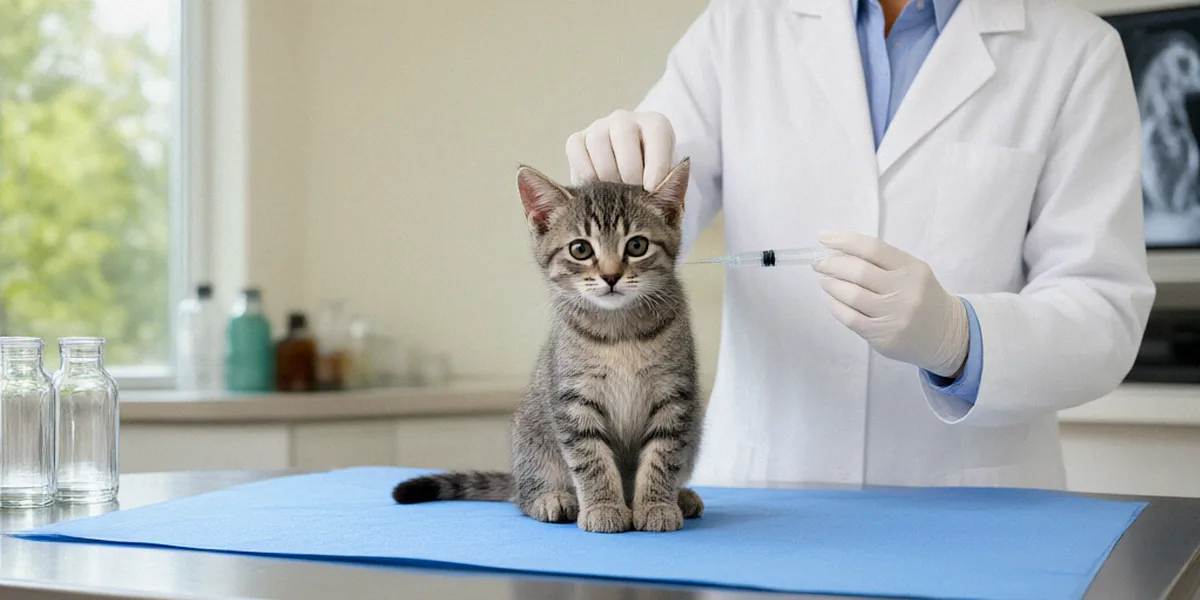
Kittens aren’t born with a working immune system. They get temporary protection from their mother’s milk, but that protection is borrowed time. As maternal antibodies fade, usually somewhere between 6 and 12 weeks of age, a kitten is left wide open to serious diseases like panleukopenia, calicivirus, and feline viral rhinotracheitis. Panleukopenia in particular can be fatal to a young kitten, and it survives in the environment for a long time.
Here’s the part that surprises people: indoor cats in Canada need core vaccines too. Viruses don’t respect your front door. They ride in on shoes, clothing, and hands. If you’ve visited a shelter, a pet store, or a friend’s cat, you can carry the virus home without ever knowing it. That’s why the Canadian Veterinary Medical Association (CVMA) vaccination guidelines apply to indoor and outdoor cats alike, with only the non-core vaccines adjusted based on lifestyle.
The Gap Between Mom’s Antibodies and Immunity
Maternal antibodies are a double-edged sword. They protect a kitten early on, but they can also block a vaccine from working if it’s given too soon. This is exactly why kittens get a series of shots rather than one. Each booster is timed to catch the kitten after maternal antibodies have dropped low enough for the vaccine to take hold. Skip a booster in the series and you may leave a window where your kitten is unprotected.
Core vs. Non-Core Vaccines: What’s the Difference?
Core vaccines are recommended for every cat, regardless of lifestyle. In Canada, that means the FVRCP vaccine and rabies. Non-core vaccines are optional and depend on risk factors like outdoor access, multi-cat households, or shelter exposure. We’ll get into those in a moment.
The Core Kitten Vaccination Schedule in Canada
Most Canadian veterinarians follow CVMA vaccination guidelines, though the exact timing can shift slightly based on your region and your kitten’s health. Here’s the typical timeline we see across the country.
6 to 8 Weeks: First FVRCP Shot
The first FVRCP vaccine is usually given between 6 and 8 weeks of age. FVRCP stands for feline viral rhinotracheitis, calicivirus, and panleukopenia, three of the most common and dangerous viruses affecting cats. This is often the kitten’s very first vet visit, so expect a full physical exam alongside the injection.
10 to 12 Weeks: Booster and FeLV Discussion
The second FVRCP booster lands around 10 to 12 weeks. This is also when your vet will bring up the FeLV (feline leukemia virus) vaccine if your kitten has outdoor access or lives with other cats. FeLV is non-core, but it’s strongly recommended for kittens who go outside or come from a shelter or multi-cat environment.
14 to 16 Weeks: Final Booster and Rabies
The third FVRCP booster is given at 14 to 16 weeks, and rabies is typically administered between 12 and 16 weeks. Here’s something many owners don’t realize: rabies vaccination is required by law in some Canadian provinces, including Ontario. Even if you live somewhere it isn’t mandated, most vets recommend it. It protects your cat and it’s often required for boarding, travel, or cross-border trips.
Optional Vaccines: FeLV, Bordetella, and More
Non-core vaccines aren’t right for every cat, but they matter a lot for some. Your vet will weigh your kitten’s lifestyle, household, and local risk before recommending them.
Feline Leukemia Virus (FeLV): Who Needs It?
FeLV is non-core but recommended for outdoor cats, kittens in multi-cat homes, and any cat living with an FeLV-positive housemate. The virus spreads through saliva, mutual grooming, and shared food bowls, and it can be fatal. If your kitten will ever step outside or meet other cats, ask your vet about it.
Bordetella and Chlamydia: Rarely Necessary
Bordetella is rare in cats, though some Canadian shelters and boarding facilities may advise it in outbreak situations. Chlamydia vaccines exist but aren’t commonly used in Canada. For most pet cats, these aren’t part of the standard plan.
What to Expect at the Vet Visit
A typical kitten vaccine appointment is quick, but it’s more than just a needle. Here’s the flow we see at most Canadian clinics.
Before the Shot: Health Check and Temperature
Your vet will start with a physical exam: listening to the heart and lungs, checking eyes, ears, and teeth, palpating the belly, and taking a weight. A rectal temperature is standard. If your kitten is running a fever or seems unwell, the vaccine may be postponed until they’re healthy.
After the Shot: Mild Reactions vs. Serious Signs
Mild side effects are normal and usually fade within 24 to 48 hours. Watch for:
- Lethargy or sleepiness
- Soreness or a small lump at the injection site
- Reduced appetite for a day
- Sneezing or mild nasal discharge after the intranasal version
Serious reactions are rare but require immediate veterinary care. Call your vet right away if you see facial swelling, hives, vomiting, difficulty breathing, or collapse. Canadian clinics often send reminders via email or text for the next booster, so keep an eye on your inbox.
Costs and Pet Insurance in Canada
Vaccine pricing varies by province, clinic, and whether the visit includes an exam fee. As a rough range, expect $80 to $200 per visit for kitten vaccines in Canada, with the first visit usually the most expensive because of the full exam.
Average Vaccine Costs by Province
Costs tend to run higher in urban centres and lower in rural areas. Ontario and British Columbia tend to sit at the higher end, while parts of the Prairies and Atlantic Canada are often more affordable. Your best bet is to call two or three local clinics and ask for a written estimate.
Does Pet Insurance Cover Vaccines?
Standard pet insurance Canada plans usually don’t cover routine vaccines, but many providers offer wellness add-ons that do. Trupanion and Petsecure are two of the most common names Canadian owners ask us about. Trupanion focuses on accident and illness coverage, while Petsecure offers a range of plans with optional wellness riders. If you want vaccine costs reimbursed, look for a wellness add-on specifically.
Tips for a Stress-Free Vaccination Experience
Vet visits don’t have to be a wrestling match. A little prep goes a long way.
Carrier Training and Calming Techniques
Leave the carrier out at home with treats and a soft blanket inside so it becomes a familiar spot, not a scary one. On the day of the appointment, spray the carrier with a calming product like Feliway about 15 minutes beforehand. Book a quiet mid-morning or early afternoon slot if your clinic offers one, and bring a towel to drape over the carrier in the waiting room.
Keeping Records for Travel and Boarding
Keep a folder or digital copy of every vaccine record with dates and product names. You’ll need it for boarding, grooming, travel, and any cross-border trip. Indoor cats still need vaccines, and having proof on hand makes everything easier.
Staying on schedule protects your kitten now and keeps the broader Canadian cat community safer, since vaccinated cats don’t spread preventable viruses to other pets. Book that first vet visit early, ideally within a few days of bringing your kitten home, and let your vet tailor the plan to your region and your cat’s lifestyle.
FAQ
How much do kitten vaccines cost in Canada?
Expect roughly $80 to $200 per visit, depending on your province and clinic. The first visit is usually the priciest because it includes a full exam. Wellness add-ons through pet insurance Canada providers like Trupanion or Petsecure may reimburse some of that cost.
Are vaccines really necessary for indoor cats?
Yes. Core vaccines protect against viruses that can enter your home on shoes, clothing, or hands. The CVMA vaccination guidelines recommend core vaccines for all cats, indoor or not.
Is the rabies vaccine required by law in Canada?
It depends on the province. Rabies vaccination is required by law in some Canadian provinces, including Ontario, and it’s strongly recommended everywhere else. Many boarding facilities and travel situations require proof of it too.
When can my kitten go outside after vaccines?
Most vets suggest waiting until about one to two weeks after the final booster at 14 to 16 weeks. Until then, keep your kitten indoors or in a controlled, supervised space.
What if my kitten misses a booster?
Don’t panic, but do call your vet. Depending on how long it’s been, they may simply resume the series or restart it. The goal is to avoid any gap where your kitten is unprotected.