
Grooming Long-Haired Cats: What We’ve Learned as Canadian Cat Owners
The first time we tried to brush a squirmy long-haired cat, we ended up with more fur on our sweaters than on the brush. Our rescue Ragdoll, Maple, treated the whole experience like a wrestling match — and she won. It took a few weeks, a better comb, and a lot of treats before we figured out what actually works. Along the way, we learned that grooming a long-haired cat isn’t just about keeping them pretty. It’s about preventing painful mats, cutting down on hairballs, and catching skin problems before they turn into expensive vet visits. Here’s everything our team has picked up, written for Canadian cat owners dealing with the same fluffy chaos.
Why Long-Haired Cats Need Extra Grooming Attention
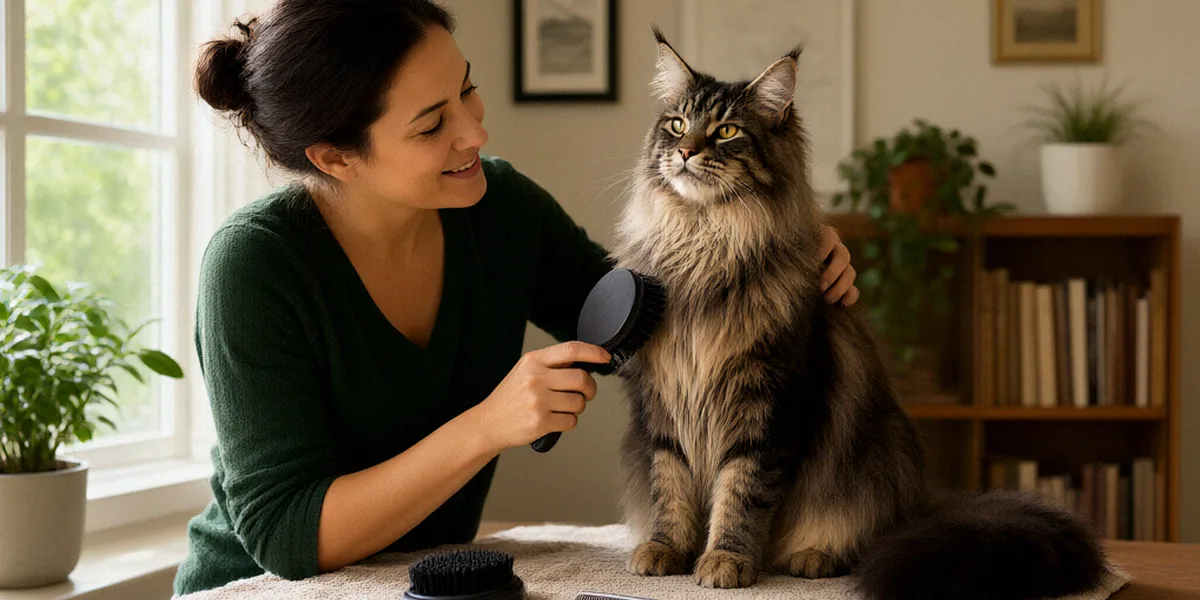
Long-haired cats aren’t just short-haired cats with more fur. Their coats are structurally different, and that changes everything about how you care for them. Breeds like Maine Coons, Persians, and Ragdolls — three of the most popular long-haired breeds in Canada — carry a double coat: a soft, dense undercoat for insulation and a longer, silkier topcoat for protection. When that undercoat sheds and gets trapped by the topcoat, it forms mats. And mats don’t just look bad. They pull on the skin, trap moisture, and can hide infections underneath.
Regular grooming prevents that. It also reduces the amount of loose fur your cat swallows while self-grooming, which means fewer hairballs on your rug at 3 a.m.
The Science of a Long-Haired Coat
The undercoat sheds continuously, while the topcoat grows slowly and sheds less. If you only brush the surface, you’re basically polishing the roof while the basement floods. Dead undercoat keeps accumulating, wraps around live fur, and tightens into felt-like clumps close to the skin. That’s why a comb — not just a brush — needs to reach all the way down to the skin. Once a mat forms, it doesn’t loosen on its own. It only gets tighter.
Common Grooming Challenges in Canadian Homes
Canadian winters are brutal on coats. Outdoor humidity drops, and indoor heating pulls even more moisture out of the air. The result is dry, static-prone fur that tangles faster than usual. We’ve noticed our cats mat more between November and March than at any other time of year. Humid summers in Ontario and Quebec create the opposite problem — damp coats that stay wet near the skin and can develop skin irritation if not dried properly.
Essential Grooming Tools We Recommend
You don’t need a salon’s worth of equipment, but you do need the right basics. Here’s what’s in our grooming kit:
- Stainless steel comb — the workhorse. Look for one with wide teeth on one end and fine teeth on the other.
- Slicker brush — great for removing loose topcoat fur and smoothing the surface.
- Dematting rake — for working through tangles before they become solid mats. Use gently.
- Blunt-nose scissors — for safely trimming small mats or fur around the sanitary area.
- Cat-safe nail clippers — grooming sessions are a good time to check claws too.
Brands we’ve had good luck with include Chris Christensen (pricey but excellent combs), Safari, and Hertzko. You can find most of these at PetSmart and Ren’s Pets, two of the most common Canadian retailers for grooming tools. Independent pet stores often carry Chris Christensen, while big-box stores lean toward Safari and Hertzko.
Brushes vs. Combs: What Actually Works
Brushes are for the surface. Combs are for the truth. A slicker brush will make your cat look great in five minutes, but it won’t tell you whether there’s a mat forming near the skin. A stainless steel comb will catch every tangle, which is why we always start and finish with a comb. Brushes come in the middle.
Budget-Friendly vs. Professional Tools
A basic Safari comb runs around $10–15 and works fine for most cats. Chris Christensen combs can run $40–60 but last for years and glide through coats with less pulling. If your cat mats easily or has a particularly dense coat, the upgrade is worth it. If you’re just starting out, buy a mid-range comb and a decent slicker brush, then upgrade once you know what your cat actually needs.
Step-by-Step Grooming Routine for Long-Haired Cats
We groom our long-haired cats once a week for about 15 minutes, plus quick daily checks. Here’s the routine that’s worked for us:
- Start with the stainless steel comb. Work section by section, parting the fur down to the skin, and comb in the direction of growth. If the comb snags, stop and work that spot with your fingers before continuing.
- Switch to the slicker brush. Use gentle, short strokes in the direction of fur growth to lift loose undercoat and smooth the topcoat.
- Finish with the fine-tooth end of your comb to catch any remaining tangles, especially around the belly, armpits, and behind the ears.
- Reward with a treat after each section — not just at the end. Short, positive sessions keep cats cooperative.
If your cat only tolerates five minutes, do five minutes. Two short sessions beat one long battle every time.
Daily Quick Checks vs. Weekly Deep Grooms
Daily checks take 30 seconds. Run your hands over your cat’s body, feeling for small knots behind the ears, under the chin, in the armpits, and along the belly. If you find something, work it out immediately — a pea-sized tangle is easy; a palm-sized mat is not. Save the full comb-out for your weekly session.
How to Handle Mat Removal Safely
Never cut a mat with scissors unless you can slide a comb between the mat and the skin first. Cat skin is thin and loose, and it’s very easy to slice it accidentally. For small mats, work them apart with your fingers and a dematting rake, then comb out the loosened fur. For larger or tight mats, stop and call a professional. We’ve seen too many home haircuts end at the vet’s office.
Bathing and Drying Long-Haired Cats
Most long-haired cats rarely need a bath. Cats are fastidious self-groomers, and over-bathing strips natural oils from the coat, which can actually make matting worse. When a bath is necessary, use a cat-specific shampoo — Burt’s Bees and Vet’s Best are two we trust and can find easily in Canada. Never use human shampoo; the pH is wrong for cat skin.
When a Bath Is Necessary
Baths are warranted if your cat has gotten into something greasy or toxic, has a skin condition your vet wants treated with medicated shampoo, or has lost mobility and can’t groom their rear end properly. Otherwise, spot cleaning with a damp cloth is usually enough.
Drying Techniques That Don’t Stress Your Cat
Drying matters more than the bath itself. A damp undercoat can trap moisture against the skin and cause irritation, especially in humid Canadian summers. Towel-dry thoroughly, then use a pet-safe blow dryer on the lowest heat and speed setting — or skip the dryer entirely and keep your cat in a warm room until fully dry. Never use a human hairdryer on high heat; cat skin burns easily.
When to Call Your Vet or a Professional Groomer
Some situations are beyond home grooming. If mats are tight against the skin, if the skin underneath looks red, raw, or smells bad, or if your cat seems lethargic, hides when you approach with a comb, or flinches when touched, it’s time to get help. Severe matting can cause skin infections, and those infections can spread quickly.
Red Flags: Skin Infections and Matted Fur
Watch for redness, swelling, discharge, bald patches, or a yeasty smell. Cats in pain often stop grooming altogether, which makes mats worse. If your vet diagnoses a mat-related skin infection, treatment may include antibiotics, medicated shampoo, or shaving the affected area. Pet insurance in Canada, including providers like Trupanion and Petsecure, may cover grooming-related vet visits if mats cause skin infections — it depends on your policy, so check the fine print before you need it.
Finding a Cat Groomer in Canada
Not all groomers handle cats, and even fewer handle anxious cats well. Ask your vet for referrals, or search for groomers certified in feline handling. Expect to pay $80–150 for a full groom depending on your city. Mobile groomers are increasingly common in urban areas and can be a good option for cats who hate car rides.
Preventing Mats Between Grooming Sessions
Prevention is cheaper and easier than correction. A few small changes around the house make a big difference.
Home Environment Tweaks
Keep indoor humidity around 40-50% with a humidifier, especially during Canadian winters. That range helps prevent static and matting in Canadian homes and keeps coats from drying out. Provide scratching posts and cat trees so your cat stretches and moves their coat naturally. A leave-in conditioner like The Honest Kitchen’s cat spray can also help detangle fur between sessions — spray lightly, then comb through.
Diet and Supplements for a Healthy Coat
A healthy coat starts from the inside. Look for cat food with omega-3 fatty acids, or add a fish oil supplement recommended by your vet. Hydration matters too — many cats don’t drink enough water, and a wet food diet or a cat fountain can help. A well-nourished coat is naturally more resistant to tangles.
FAQ
How often should I groom my long-haired cat?
We recommend a full comb-out once a week, plus 30-second daily checks with your hands to catch small tangles before they grow. Cats with very dense coats, like Persians, may need grooming two or three times a week.
Can I use human shampoo on my cat?
No. Human shampoo is formulated for a different skin pH and can dry out or irritate your cat’s skin. Use a cat-specific shampoo like Burt’s Bees or Vet’s Best instead.
Does pet insurance in Canada cover mat removal?
It depends on the policy. Providers like Trupanion and Petsecure may cover vet visits related to mat-caused skin infections, but routine grooming is typically excluded. Always read your policy details carefully.
What humidity level is best for preventing mats?
Aim for 40-50% indoor humidity. This range reduces static and keeps coats from drying out, which is especially important during Canadian winters when indoor heating pulls moisture from the air.
Where can I buy grooming tools in Canada?
PetSmart and Ren’s Pets are the most common retailers, and both carry brands like Safari and Hertzko. For professional-grade tools like Chris Christensen, check independent pet stores or order online.
Consistent, gentle grooming does more than keep your cat looking good. It strengthens the bond between you, catches health problems early, and prevents the kind of severe matting that leads to costly vet bills. Start small — five minutes, a good comb, and a pocket full of treats — and build from there. Your cat’s coat, your furniture, and your wallet will all thank you.